Flinto, Haiku and Origami: The Interactive Prototyping Gap and What Fills It
Flinto and Origami are Mac-only, Haiku Animator's code is on GitHub, and InVision is gone. What happened to interactive prototyping tools, and what replaces them now.
Core Takeaway
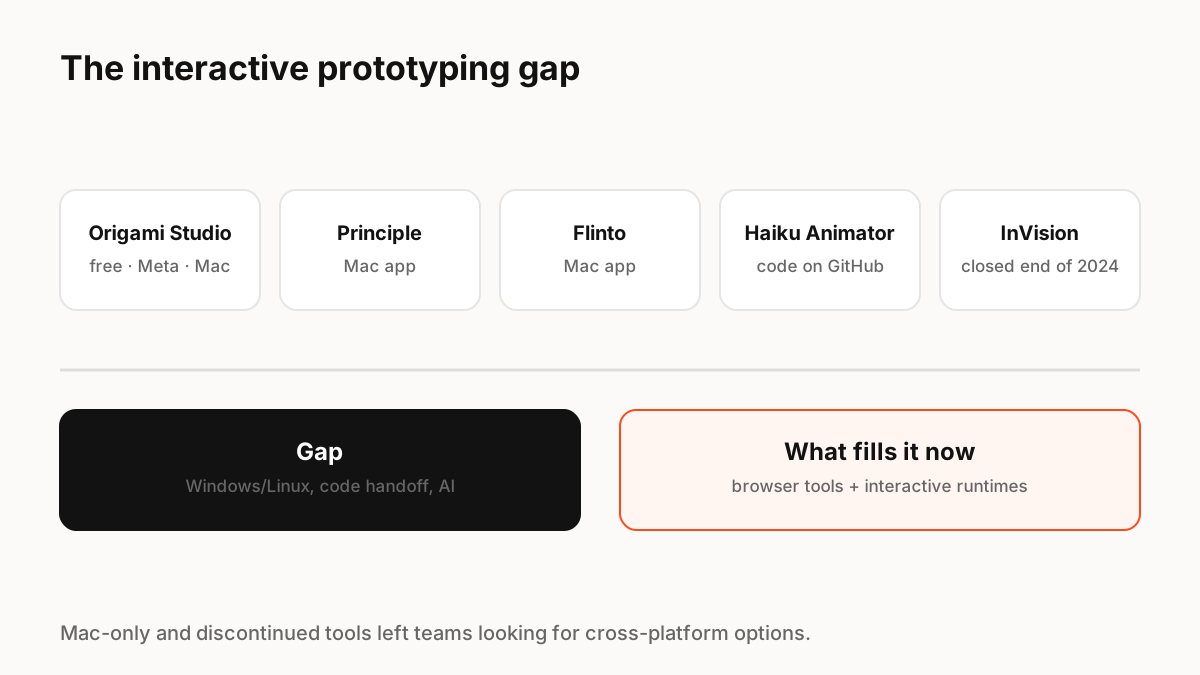
A generation of interactive prototyping tools, including Flinto, Principle and Origami Studio, are Mac-only, Haiku Animator now lives as a project on GitHub, and InVision shut down at the end of 2024. Teams that need cross-platform tools or motion that ships in the product have moved to browser-based design tools for prototypes and to runtime-based tools such as Rive and ExodeUI for production motion.
Where the classic tools stand
Each of these tools solved part of interactive prototyping well. Their limits today are mostly platform and handoff.
- Origami Studio: free, made by Meta, available for Mac; powerful patch-based logic.
- Flinto: a Mac app with a 14-day free trial; fast transitions and gestures.
- Principle: a Mac app; quick timeline-style interactions.
- Haiku Animator: a design tool for Lottie animations and interactive web components, now published on GitHub.
- InVision: design collaboration services shut down on December 31, 2024.
The gap they leave
Three needs are not well served by the classic set: designers on Windows and Linux, teams that want the interaction to ship rather than be rebuilt, and teams that want AI coding tools to read and edit interaction files. Browser-based tools solve the first; runtime-based tools and open file formats solve the other two.
What fills it now
For prototypes, Figma and Penpot cover most needs in the browser, and ProtoPie remains the choice for complex sensor and logic prototypes. For interaction that ships, Rive and ExodeUI, which we make, author states and logic in a file that runs in the app through a runtime. ExodeUI also has an MCP server so Claude Code and Cursor can edit those files.
Should you switch?
If Origami, Flinto or Principle still works for your team and your output is a prototype, there is no urgent reason to move. Switch when you add Windows or Linux designers, when rebuilding prototypes in code becomes the bottleneck, or when a tool stops being maintained.
Key Principles to Remember
- Origami Studio, Flinto and Principle are Mac apps
- Haiku Animator is now published on GitHub; InVision shut down end of 2024
- Browser tools cover cross-platform prototyping
- Runtime-based tools let interactions ship instead of being rebuilt
- Switch when platforms, handoff or maintenance force it
Frequently Asked Questions
Sources
- Origami Studio documentation — Meta (origami.design)
- Flinto for Mac — Flinto
- Haiku Animator — GitHub
- InVision, a UX trailblazer, is shutting down in the era of Figma — Fast Company