UX Portfolio Case Studies That Stand Out (Beyond the Bootcamp Template)
How to write UX case studies hiring managers want: the problem, your role and constraints, the messy middle, trade-offs and outcomes, instead of a template of final screens.
Core Takeaway
Hiring managers want to see how you think, not just final screens. A strong case study explains the problem and why it mattered, your role and constraints, the research and iterations including what failed, the key decisions and trade-offs, and the outcome with evidence. Fewer, deeper case studies beat many shallow ones.
Why template case studies blend together
Many portfolios follow the same structure: empathise, define, ideate, prototype, test, with polished screens at the end. Nielsen Norman Group notes a common misconception that portfolios are only final UI designs and screenshots, and quotes hiring managers who want to see the messy process: the problem, your role, constraints, timeline and how the design changed between iterations.
What to include
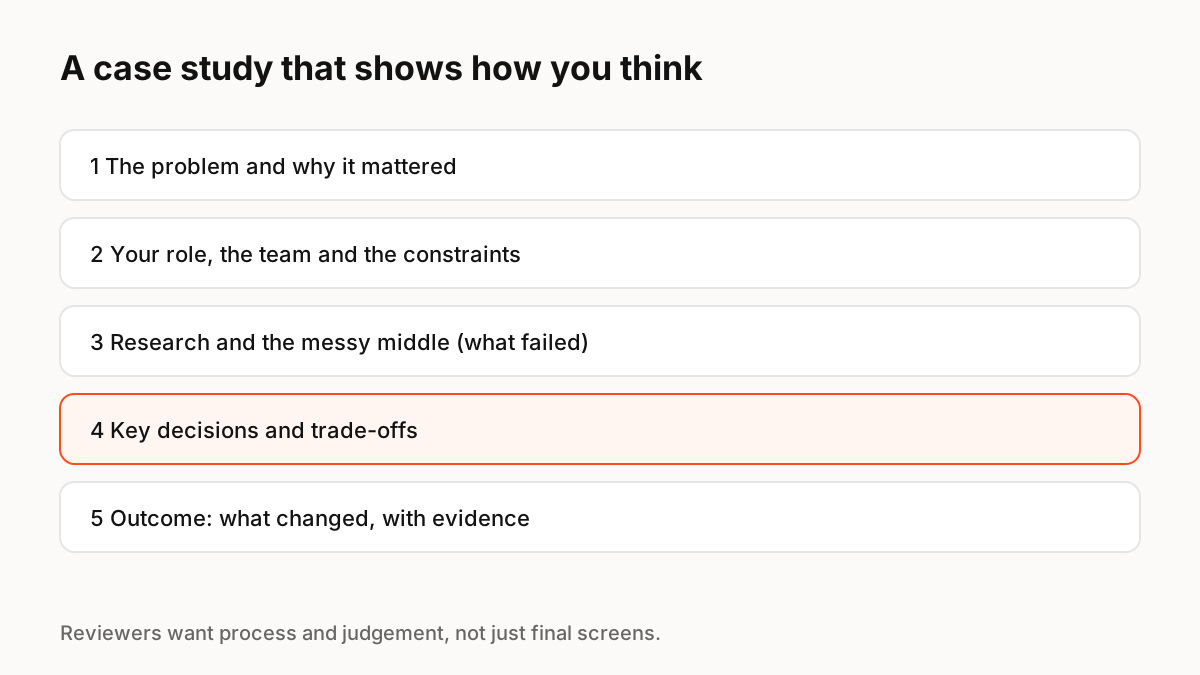
Structure each case study around decisions:
- The problem: who was affected, how you knew, and why it mattered to the business.
- Your role: what you did yourself versus the team, and the constraints you worked under.
- The messy middle: research, ideas you rejected and why, and what testing changed.
- Decisions and trade-offs: what you prioritised and what you gave up.
- Outcome: what shipped and what changed, with evidence where you have it, and what you would do differently.
Choosing projects
NN/g's first step is to take inventory of all your projects, then choose. Pick two or three that show different strengths, such as research, interaction design and systems work, and that you can discuss in depth. A real project with constraints beats a polished concept with none.
Show interaction, not just screens
Static screens hide some of the most important design work: how states change, how errors recover, how motion guides attention. Short recordings or live prototypes of key interactions show this far better than mockups. If you designed motion, show it moving.
For junior designers
With fewer real projects, depth matters more. Redesign something you use, but research it properly, state your constraints, test with real people and be honest about what you learned. Volunteer or open-source work with real users and outcomes is even stronger.
Key Principles to Remember
- Show process and judgement, not just final screens
- Explain the problem, your role and constraints
- Include what failed and why decisions changed
- Show outcomes with evidence where possible
- Two or three deep case studies beat many shallow ones
Frequently Asked Questions
Sources
- 5 Steps to Creating a UX-Design Portfolio — Nielsen Norman Group